


Preserving Historic Railway Station Buildings Across Britain
Many once-threatened station buildings survive through careful restoration, adaptive reuse and the dedication of local community groups across the country.

More Than a Backdrop to a Steam Train
Watch a preserved locomotive pull out of a restored station and it is easy to overlook the building behind it. Yet the ticket office, the waiting room, the cast-iron canopy and the little lamp on the platform are just as much part of our railway heritage as the engine itself. Across Britain — and nowhere more visibly than in Scotland — hundreds of these buildings survive because somebody decided they were worth saving.
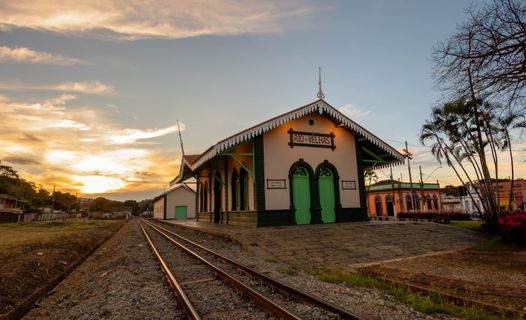
Station architecture tells you where you are. A Highland halt with timber walls and deep eaves feels entirely different from a sandstone town station with a glass-roofed booking hall. These structures were built to a purpose: shelter, ticketing, parcels, signalling, staff accommodation. Many were modest. Others were confident statements by rival pre-grouping companies. All of them anchored their communities.
How So Many Came Close to Being Lost
The closures of the 1960s left a long shadow. Lines went, and with them the reason for the buildings. Some were demolished quickly. Others passed into private hands and were altered beyond recognition — a garage door where the booking window used to be, a flat roof slapped over a Victorian canopy. A few simply sat empty, which is often the worst outcome of all. Water gets in, dry rot follows, and a building that survived a century of passengers can be beyond saving within a decade.
What changed the picture was a shift in attitude. Councils began to see stations as anchors for regeneration rather than liabilities. Local groups started to catalogue what remained, photograph it, and argue for its retention. In Scotland, heritage railway projects gave redundant buildings a working purpose again: a station that once handled coal and passengers might return as a terminus with a tearoom, a small museum and a platform full of volunteers in period uniform.
What Restoration Actually Involves
Good conservation is rarely glamorous. The order of work matters enormously, and it almost always starts at the top.
- Roof and rainwater goods first. Slate, lead, cast-iron gutters and downpipes. If water is kept out, everything else can wait.
- Masonry and mortar. Repointing with lime mortar matched to the original, never hard cement, which traps moisture and damages soft stone.
- Joinery. Sash windows, doors, canopy brackets and timber valances. Repairing original timber is nearly always better than replacing it.
- Ironwork. Columns, brackets, footbridges and lamp posts, cleaned back and repainted in a researched colour scheme.
- Fittings and signage. Enamel signs, benches, clocks, ticket racks and handrails — often the details people remember most fondly.
A condition survey before any work begins is money well spent, and so is a thorough photographic record. Paint analysis can reveal the original colour scheme, which is far more reliable than guesswork or nostalgia. An early conversation with the local conservation officer will save months of difficulty later on.
Adaptive Reuse: Giving Buildings a Working Future
The most secure future for a station building is a use that generates income and footfall. Across the country, former waiting rooms have become cafés, booking halls have become community hubs, goods sheds have become workshops and cycle hire bases, and old station houses have become bunkhouses and holiday lets. On heritage lines, the building often supports the railway itself — a shop, a buffet, a small museum, or a base for the permanent way gang.
The trick is to make the new use fit the building, not the other way round. Extra services need to be threaded in carefully: a flue for a kitchen, accessible toilets in an outbuilding rather than across a historic interior, and heating that does not introduce damp. Listed building consent and planning permission should be discussed before designs are finalised, not after.
The People Who Make It Happen
Almost none of this happens without volunteers. Station adoption groups tend planting and clear drains. Friends organisations raise funds for a replacement canopy or a set of new windows. Heritage railways run training programmes in joinery, masonry and painting, giving people skills that transfer far beyond the platform edge. Small, visible projects — a repainted bench, a repaired sign, a cleared platform — build momentum and persuade funders that a group can deliver.
Funding tends to arrive in layers: modest grants, local fundraising, membership schemes, and occasionally a larger heritage grant for a major phase of work. Applications are always stronger when the building has a clear, sustainable use attached to it.
Where to See It for Yourself
Scotland is a fine place to study the results. The restored terminus at Bo'ness on the Forth, the Speyside station buildings around Aviemore and Boat of Garten, the stone-built station at Brechin in Angus, and the trim little halts of Moray and Aberdeenshire all show different approaches — some grand, some humble, all cared for. Travel on a steam day and you get the whole picture: the engine, the platform, the building, and the people who keep them all going.
The lesson is simple enough. Historic station buildings survive when someone is prepared to use them. Restoration is a long game of roofs, mortar and paperwork, but it ends with a building that is once again part of daily life rather than a photograph.
Post a comment